
Is the booking API available to all ParkingPro customers?
Contact support@parkingpro.eu to confirm documentation, access rights and the scope for your booking form. We do not assume identical access requirements for every project.
Europe's no. 1 Parking Management System


ParkingPro · B2B
Connect your own booking form to ParkingPro while keeping availability, prices and reservations in one central system. The Parking Booking API supports availability and price requests and reservation creation. Your development team can request the current documentation, access scope and implementation details from support@parkingpro.eu.
01 / ParkingPro
The core purpose of ParkingPro's booking API is to let an operator's own system send a request to create a booking, which is then recorded in ParkingPro's central booking engine alongside bookings made through the standard website, call centre or other connected channels. This is particularly relevant for operators who want full control over the design and logic of their own booking form, rather than relying solely on a standard ParkingPro-hosted page.
Because the booking still writes into the same central engine, capacity and channel pricing stay consistent: a slot booked through a custom form built on the API reduces availability in exactly the same way as a booking made directly on a ParkingPro-hosted site, which avoids the double-booking risk that can arise from disconnected systems.
02 / ParkingPro
Begin with your actual booking journey: products, dates, availability, prices and the reservation you want to create. Your development team should identify the data needed for each step and ask support to confirm the supported functions and access rights. Payment, amendments and cancellation requirements must be discussed separately rather than assumed from the word API.
Request the current documentation before implementation. Specific fields, authentication details and testing options should come from the confirmed specification. This page does not publish invented endpoints or a pricing policy; ask our team to clarify the applicable terms for your project.
03 / ParkingPro
When an operator requests API access, the next step is typically a conversation to understand the intended use case: what the custom booking form or connected system needs to do, expected booking volumes, and any specific business rules that need to be respected when a booking is created. This conversation shapes what access and support are provided, rather than a generic, one-size-fits-all package.
Technical details such as specific endpoints or authentication methods are confirmed directly with the operator as part of this process, since these depend on the agreed scope of access and are not published here. Operators should expect to receive this information, along with any relevant documentation, once API access has been arranged with ParkingPro's team.
See how ParkingPro fits your parking operation.
Request a demo04 / ParkingPro
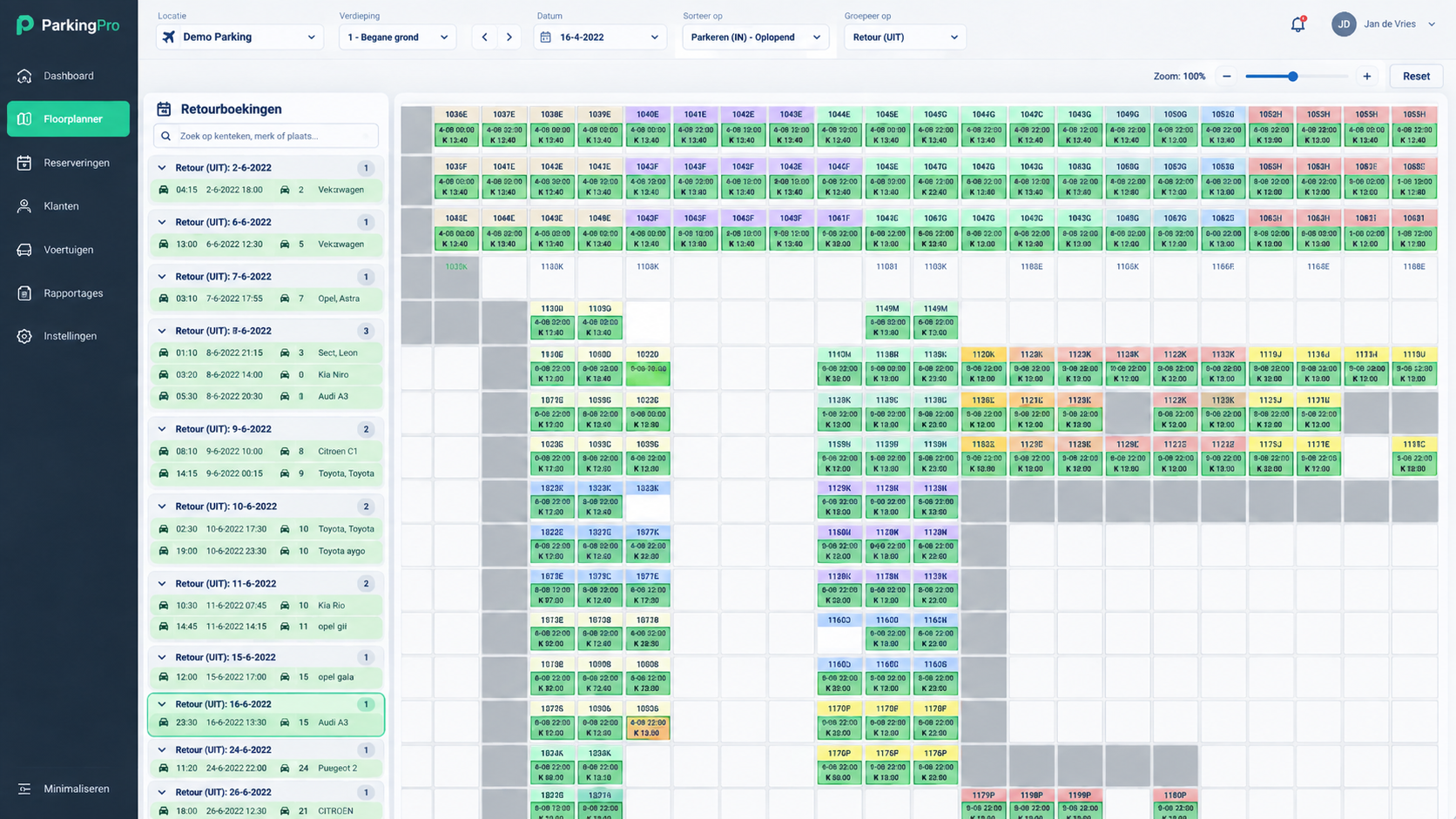
Bookings created via the API flow into the same operational tools used for every other booking source, which means staff on site can still use the Driver App to record vehicle photographs and capture a signature at drop-off and collection for API-originated bookings, just as they would for any other reservation.
For locations using the optional live flight time feature, a booking created via the API that includes flight details can, where supported, still make use of that feature — provided the relevant flight data fields are included in the booking request and the feature is enabled for the location. The exact data fields required for this should be confirmed as part of the API access conversation with ParkingPro.
Contact support@parkingpro.eu to confirm documentation, access rights and the scope for your booking form. We do not assume identical access requirements for every project.
Yes, the booking API is designed to let a request to create a booking be sent from your own system or form into ParkingPro's central booking engine, once access has been arranged.
Specific technical details, including endpoints and authentication methods, are confirmed directly with you once API access has been agreed, rather than published generally.